

The Road as Classroom

When the Word Lingers: Reflective Insights from Scripture
READ Mark 9:30–37

“If anyone would be first, he must be last of all and servant of all.” Mark 9:35 ESV, excerpt
Picture the road after a difficult conversation. Your feet keep moving, but part of you is still back there, arranging a better answer. Perhaps someone received the credit you hoped for. Perhaps you spoke too quickly and have been defending the words ever since. You can travel a considerable distance while carrying the same small argument inside you.
This week’s free companion guide, Make Room on the Way, offers five questions and a simple practice for bringing an ordinary encounter to Jesus and responding with humble service.
Download it with today’s reflection:
In Mark’s account, Jesus and His disciples are passing through Galilee. He is teaching them about His coming death and resurrection, words they cannot yet understand and are afraid to question. Before long, we discover that another conversation has been taking place among them. Somewhere along the road, they have been comparing their own importance.
The distance between those two conversations is painful. Jesus is preparing them for His self-giving death. They are wondering who stands highest. They are close enough to travel with Him, yet the shape of His kingdom is still strange to their hearts. Mark lets us see that closeness to sacred things does not, by itself, make us humble.
It is a mercy to recognize ourselves here. We may listen carefully to a sermon and still resent the person who receives more attention afterward. We may serve faithfully and then keep a private account of who noticed. We may know the language of grace while quietly organizing our lives around being impressive. The disciples’ road runs nearer to our own front door than we might wish.
When they reach the house in Capernaum, Jesus brings the roadside conversation into the room. He asks what they had been discussing. They offer Him silence. The argument that seemed worth having among themselves becomes difficult to explain in His presence. Their silence reveals how much the question has uncovered.
Jesus sits down and calls the Twelve. He does not leave them alone with the exposure of their pride. He teaches them what greatness looks like under His rule, and then He brings a child among them. The movement is wonderfully concrete. An argument about rank meets a person to receive.
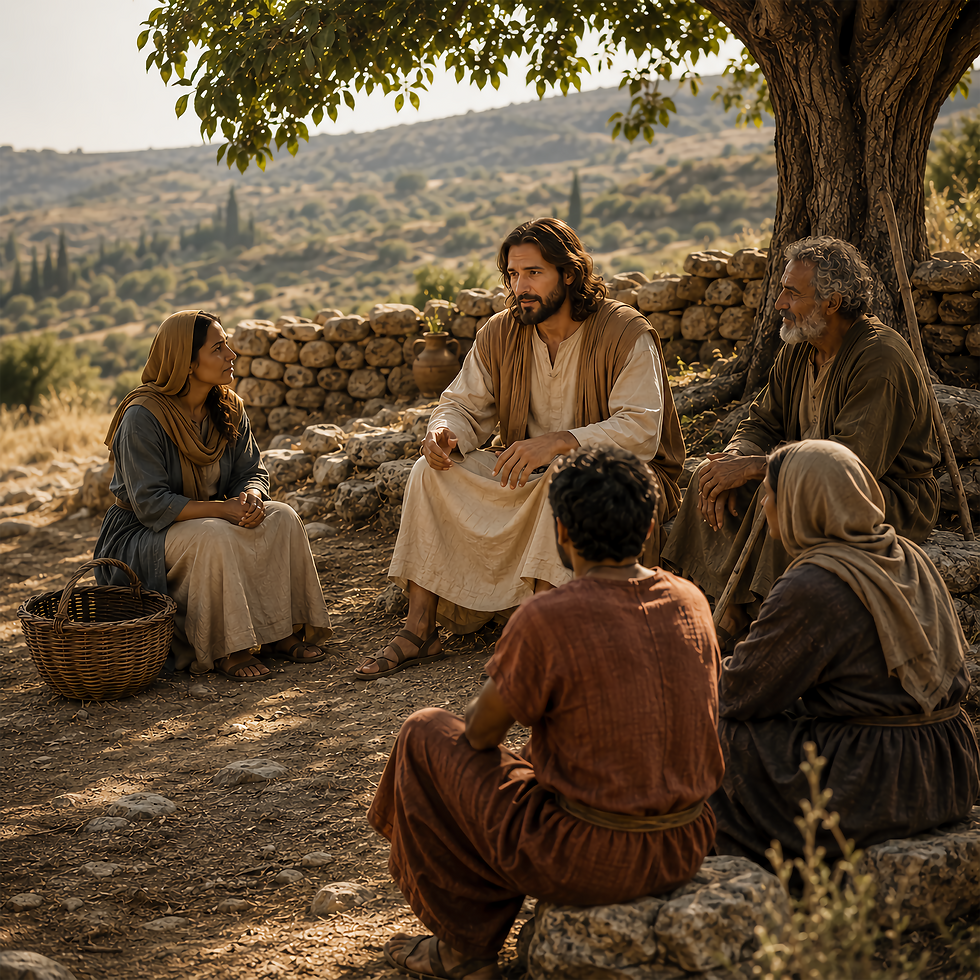
Imagine the disciples making room. A knee shifts. A body turns. Attention moves away from the question of who deserves the highest place. Mark does not record these small movements, but the scene invites us to consider what receiving someone actually requires. There must be space where self-importance had been sitting.
The child is not introduced as a model of impressive achievement. Nor does Jesus tell the disciples to study the child’s innocence. His instruction concerns welcome in His name. Receiving this little one is bound to receiving Him and the Father who sent Him. The person who cannot advance their standing becomes the person through whom their welcome of Christ is tested.
The road had exposed their hearts. Jesus gave them a different way to live.
This is why the road can become a classroom. Life together brings hidden desires into view. Weariness can uncover impatience. Another person’s success can uncover envy. An interruption can reveal how tightly we have closed our hands around our plans. Yet experience does not explain itself, and repetition does not guarantee wisdom. We can walk the same road for years and practice the same resentment each time.
We need Christ to teach us. His Word names what we might excuse, and His Spirit enables the repentance we cannot produce by rearranging our schedule. The ordinary day becomes a place to practice what He has spoken. Reading Scripture, praying, worshiping with the church, and receiving help from other believers belong to this learning. They give us truth to carry into the conversation, the delay, and the unwelcome request.
There is a temptation to turn even this into another demand. Notice more. Reflect better. Become wiser before bedtime. Some of us already approach spiritual growth as though God were waiting for our weekly report. But Jesus is teaching disciples whose failures He will carry to the cross. Their hope rests in the Savior who gives Himself for sinners and rises again, not in their ability to become excellent students.
His service reaches deeper than ours ever can. He gives His life to redeem His people, securing the mercy we receive by faith. We do not serve our way into acceptance with God. We learn to serve because, in Christ, we have been welcomed by grace. Even our turning back after failure depends on the kindness of the One who keeps teaching us.
That changes the atmosphere of an ordinary afternoon. You notice the urge to mention how much you have done. You can confess it without arranging a speech in your defense. You recognize that the person speaking slowly has become, in your mind, an obstacle to finishing the day. You can ask for help to receive that person with attention. A small act of obedience becomes possible where self-protection had seemed automatic.
Perhaps your classroom this week is a staff meeting, a school pickup line, or the repeated task of helping someone settle into bed. Perhaps it is a message you are tempted to answer sharply. Perhaps you cannot leave your room, and the road before you is the next conversation with the person who brings your meal. The title is a picture. Christ does not require physical mobility to form a person in His love.
You need not discover a secret explanation for every inconvenience. Some days are simply hard, and some wounds require care, protection, and time. The invitation here is more modest and more searching: bring your response to Jesus. Let His written Word question what you wanted, whom you overlooked, and where you are being invited to love. A trusted Christian friend may help you hear what your own defensiveness keeps interrupting.
At the next doorway, someone may need a welcome that cannot improve your standing. No audience will gather to watch you give it. The work waiting behind you may remain unfinished for a few minutes. You can put down what is in your hands, turn toward the person, and make room. In the house at Capernaum, Jesus has already shown you where to begin.
Where has an ordinary conversation revealed your desire to be noticed, right, or first?
What does Jesus’ welcome of the child invite you to reconsider about the person before you?
What one act of quiet service could you offer today because you have already been welcomed by grace?
____________________________________________________________________________
If this reflection met you, you may also enjoy the devotional resources from Tío Felipe.
They are created to help you notice God’s presence in ordinary life through Scripture, reflection, beauty, and honest faith.


Comments