

The Patience of Christ

When the Word Lingers: Reflective Insights from Scripture
READ Mark 3:13–15

“And he went up on the mountain and called to him those whom he desired, and they came to him. And he appointed twelve (whom he also named apostles) so that they might be with him and he might send them out to preach and have authority to cast out demons.”
Mark 3:13–15 ESV
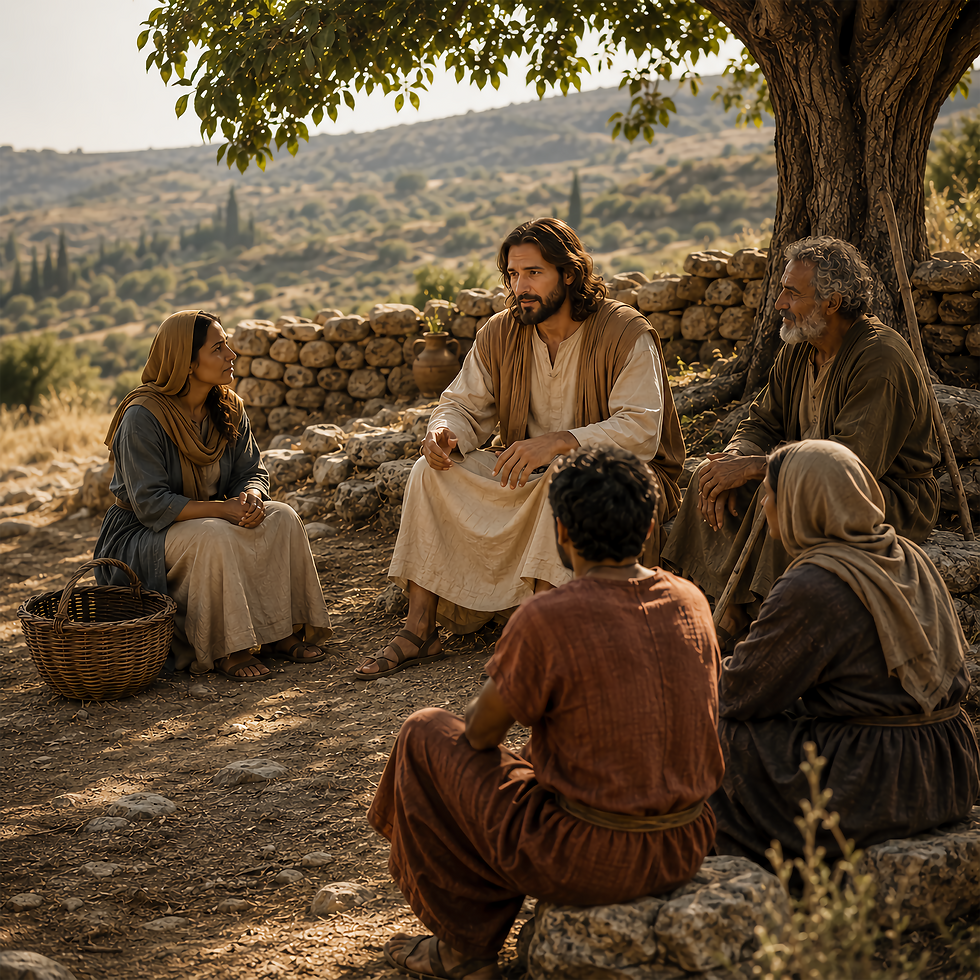
There must have been days when the road felt familiar—the same dust rising beneath their sandals, the same low hills beyond the villages, the same morning light catching the stones, and many of the same lessons.
Jesus had called these men away from familiar lives. Nets were left beside the water. A tax table was abandoned. Ordinary routines were interrupted by two words: “Follow me.” They followed, but following Jesus and understanding Jesus were not the same thing.
They heard teaching unlike anything they had heard before. They watched the sick restored and the unclean welcomed. They saw storms become still and carried bread that somehow kept multiplying in their hands. They watched Jesus move toward people others avoided and withdraw to quiet places when crowds wanted more from Him. They were close enough to see what His kingdom looked like, and still they often did not understand it.
Take the Reflection With You — This week’s free companion guide, Stay With the Work, gives you space to notice where Christ has already been changing you and where He is still asking you to follow. Use the five quiet questions and The Road Behind / The Road Ahead practice to name one evidence of grace, one unfinished place, and one faithful step for the coming week.
Mark tells us something near the beginning of their life together that is easy to move past too quickly. Jesus went up the mountain and called those He desired. Twelve were appointed. Eventually they would preach and carry His message beyond the places where they had first followed Him. But Mark places something before all of that: they were appointed “that they might be with him.”
Before being sent by Jesus, they were called to be with Jesus. That order matters. Jesus was not gathering promising candidates for a short training course. He was forming disciples, and formation would require more than information. It would require His presence.
They would walk with Him long enough for their assumptions to surface, for ambition to reveal itself, for fear to speak, and for confidence to prove thinner than they imagined. They would remain close enough for the truth they heard with their ears to begin reaching the deeper places of the heart.
Peter gives us one of the clearest pictures. He sees something truly when he confesses that Jesus is the Christ. Then Jesus begins explaining the suffering that lies ahead, and Peter resists Him. Genuine insight and serious misunderstanding stand beside each other in the same man. Peter has seen something real, and he still has much to learn.
That pattern continues. Jesus speaks again about His coming suffering, and the disciples argue about which of them is greatest. He teaches them about a kingdom where greatness bends low to serve. Later, after Jesus once again describes the road toward suffering and death, James and John ask for places of honor. They have been listening. They are still becoming.
We sometimes read those scenes and wonder how they could have missed so much. Then life exposes how much of Jesus’ teaching we are still learning too. We know what He says about trust until circumstances refuse to cooperate. We know what He says about forgiveness until someone wounds us deeply. We know what He says about humility until someone else receives the recognition we hoped would come to us. The truth may already be in our minds. Formation carries it deeper.
Jesus did not respond to His disciples’ slowness by pretending their immaturity did not matter. He corrected them—sometimes sharply. He challenged Peter, confronted their arguments, exposed their hunger for status, and overturned their definitions of greatness. His patience was never indifference.
But correction was not the end of relationship. After the rebuke, there was another road, another conversation, another meal, another question, another morning when they rose and discovered that Jesus was still there. Jesus knew exactly who He had called. Nothing Peter revealed surprised Him. The ambition of the Twelve did not force Him to reconsider whether He had chosen the wrong men. He knew what remained unfinished, and He stayed with the work.
We often become discouraged because we measure spiritual growth mainly by what has not changed yet. We notice the impatience that still surfaces, the fear that returns, the prayer life that is less steady than we wish, the need for approval that still finds us, or the temptation we thought would have lost more of its power by now. We look at ourselves and think, I should be farther along.
Sometimes that recognition is important. There are places where Christ is calling us to repent more deeply, obey more fully, or stop excusing what He has already made clear. Grace is not permission to remain unchanged. But slow growth is not evidence that Christ has abandoned His work.
Sanctification is often quieter than we expect. Perhaps the struggle has not disappeared, but you recognize it sooner. Fear still comes, but prayer enters the room earlier. Pride still rises, but confession follows more quickly. Forgiveness still costs you something, but you no longer believe bitterness deserves to stay. You may still stumble in an old place, but you no longer defend the stumbling. These may not feel dramatic, but they are not nothing.
The Spirit’s work in us is real, even when it is gradual. For those who belong to Christ, acceptance with God does not rest on reaching an acceptable level of spiritual maturity. We are justified by grace through faith because of Christ. Sanctification grows from that grace. We do not obey so that Jesus will finally remain with us; we obey because He has called us His own. We do not repent because our failures have made grace uncertain; we repent because grace has brought us near enough to tell the truth.
The patient Christ does not stand at the end of the road shouting instructions toward us. He forms His people through communion with Himself. This is why “that they might be with him” remains so important.
The disciples did not merely learn ideas from Jesus. They watched Him notice people, touch those others avoided, pray, welcome children, refuse the shortcuts of power, and keep moving toward Jerusalem when the road became costly. They were being taught by His words and shaped by His life.
Christian formation still begins there: staying near Christ. Near enough for His Word to challenge us, for prayer to expose what we would rather hide, for the fellowship of His people to reveal where love still needs to grow, for correction to reach us without driving us away, and for grace to call us forward again.
There is another side to this patience too. The patience Christ shows us should begin shaping the patience we show one another. We can be remarkably impatient with someone else’s formation. We see the pattern they keep repeating and wonder why they cannot see what seems obvious to us.
Truth still matters. There are times when love must speak clearly. Biblical patience is not silence in the presence of harm or sin. Jesus shows us something stronger: He combines truth with staying. He corrects without treating people as disposable. He confronts without confusing unfinishedness with hopelessness. He believes the work is worth continuing.
The Gospels eventually take us to a night when these same disciples fail more deeply than they imagined possible. They scatter. Peter denies that he even knows Jesus. If formation depended on their ability to prove they had finally mastered the lesson, the story could have ended there. It did not. The risen Jesus came looking for them—even Peter. The One who had stayed with them through all those miles was not finished.
There are roads in your life where the distance ahead may seem longer than you wanted. There are places where repentance is still necessary, habits of trust that still need practice, and truths you understand clearly but still need Christ to press more deeply into your heart. Do not make peace with what Jesus is calling you to surrender. But do not mistake unfinished formation for abandoned formation.
Look back for a moment and notice the miles grace has already carried you. Then look toward the road ahead. The same Christ who called His disciples to be with Him is still committed to forming those who belong to Him. Stay near Him. Receive His correction. Take the next faithful step. When growth seems slower than you hoped, remember those ordinary Galilean roads: they were still becoming, and Jesus was still with them.
Where can you see one quiet but real evidence that Jesus has been changing you, even though His work in you is not finished?
What unfinished place is Christ asking you to bring honestly under His correction rather than hide beneath discouragement or excuse?
Who in your life may need you to practice the truthful, patient presence that Jesus has shown you?
____________________________________________________________________________
If this reflection met you, you may also enjoy the devotional resources from Tío Felipe.
They are created to help you notice God’s presence in ordinary life through Scripture, reflection, beauty, and honest faith.


Comments